
Category: News
Is Photon-Counting CT the Next Big Thing in Cardiac Imaging?
Is Photon-Counting CT the Next Big Thing in Cardiac Imaging?
 Jump to Key Points
 The radiology department is seeing cardiac tissue a whole lot clearer with the emerging use of photon-counting CT (PCCT) scanners. That means better diagnosis, better prevention, and broader eligibility for patients with cardiac disease who were previously unscannable, according to experts.
“We are coming into a new era in accuracy, and the implications are profound,” Arthur Shiyovich, MD, from Brigham and Women’s Hospital and Harvard Medical School in Boston, told Medscape Medical News. Most importantly, that accuracy will significantly reduce downstream testing for cardiac disease, he said.
In his recent editorial in JACC, Shiyovich described PCCT as “transforming cardiac CT from a primarily anatomic modality into a multidimensional imaging platform capable of integrating coronary assessment, cardiac structure and function, and myocardial tissue characterization.” For patients with implanted devices or claustrophobia, or an inability to stay still for longer scan times, or who are on a long waitlist, PCCT is a new option, “and may be further enhanced by emerging deep learning-based reconstruction and analysis techniques,” he added.

Conventional CT machines have improved with higher speed, lower radiation, and larger coverage, but detection has not improved because of electrical signal loss during two-step image conversion, whereby an x-ray must first be converted to light and then into an electrical signal. For patients with dense calcium, coronary stents, or other metal implants, the signal loss during conversion results in image distortion, causing “blooming” and blurring artifacts, which makes scans difficult to read. These patients are not considered good candidates for CT scanning and instead are sent to the cath lab for stress tests or scanned using other modalities (such as MRI) that involve lengthy wait times.
Article Key Points
- PCCT improves coronary detail; ↓ blooming/blur from calcium, stents, metal.
- Thin slices 0.2 mm vs 0.6 mm; better vessel boundary and plaque characterization.
- Studies show ↓ stenosis overestimation; CAD-RADS downgraded in ~50% of cases.
- PCCT may reduce downstream CAG/cath lab referrals; better revascularization selection.
- Limits: high cost, contrast still needed; 0.2-mm scans may not lower radiation.
Dive Deeper
How does PCCT affect FFR-CT accuracy in severe coronary calcification?
Which coronary stent types remain difficult on PCCT imaging?
What are long-term outcomes after PCCT-guided CAD downclassification?
PCCT scanners count photons and convert them directly to an electrical signal, making it possible to identify tissue. Each photon is then sorted into a so-called “bin,” making it possible to construct images that include or exclude stents, metal, plaque, calcium, muscle and other tissue, or implants. The technology makes heart vessel boundaries appear clear, identifiable, and measurable and high-risk fatty plaque visible behind calcification, research showed.
What’s more, PCCT is capable of capturing a very thin slice of tissue, 0.2 mm, compared with 0.6 mm for conventional CT, so objects very close together can now be viewed separately and measured more accurately.
“Everyone in the field is really excited about this technology,” Todd C. Villines, MD, from the University of Virginia in Charlottesville and executive editor ofJACC: Advances, told Medscape Medical News.
“Our biggest challenge is artefacts and blooming…. This is really going to reduce inappropriate trips to the cath lab as we become more accurate and confident.”

Villines said the scope of advancement that PCCT technology offers continually surprises specialists. During SCCT2026, a “Stump the Masters, Stump the Professor” case involved a patient with cardiac disease who was sent to the cath lab whose tests came back normal. “All of us focused on the main artery,” Villines explained. However, when they looked at the patient’s PCCT scan, “we saw one of these tiny little septal branches was occluded — those are usually too small to interpret.”
“The PCCT was more accurate than CAG [coronary angiography] and better than invasive angiography by a lot; this really highlighted the strength of this technology,” he said.
“We now know when we call it a stenosis, you actually have a stenosis — particularly for those patients with stents.” Ultimately, Villines said that PCCT will lead to fewer complications and inappropriate procedures and better patient care.
Diagnosis Downgraded With PCCT
New data showed that PCCT is more accurate in quantifying plaques, reducing overdiagnosis. Conventional scanners overestimate plaques because of “blooming,” as reported in a 2025 article in Radiology. In 48 patients scanned, lower plaque volume was seen with ultrahigh-resolution PCCT than in energy-integrating detector CT (724 mm3 vs 10,853 mm3). Better reproducibility was also reported using PCCT.
The same researchers reported decreased overestimation of luminal narrowing with dense calcification and lower plaque-measured stenosis when scanning with PCCT vs conventional CT, all leading to downgraded Coronary Artery Disease-Reporting and Data System (CAD-RADS) scores in about half of 49 patients.
With these and other study results showing more accurate readings with PCCT, “there’s a good chance we’ll see new guidelines in the future,” Shiyovich said.
In a retrospective study his team published early this year, PCCT scans with fractional flow reserve (FFR)-CT showed that asymptomatic patients with extreme calcium (coronary artery calcium score > 1000) do not necessarily have flow-limiting disease. Of the 19 patients scanned, four underwent intracoronary angiography, one with a CAD-RADS score of 5 underwent coronary artery bypass grafting, two with a CAD-RADS score of 3 with negative FFR-CT were found to have nonobstructive CAD, and one with a CAD-RADS score of 4 was found to have moderate stenosis and a negative instantaneous wave-free ratio (0.92). No patients underwent percutaneous coronary intervention.
“Our current scanners overestimate volume of calcium,” Villines said. “Photon-counting CT really has taught us to see calcified plaque with noncalcified for the first time.” More accuracy means better diagnosis. Even the software that interprets scans will offer better data. “If what you’re putting into the software is higher quality, you get better output.”
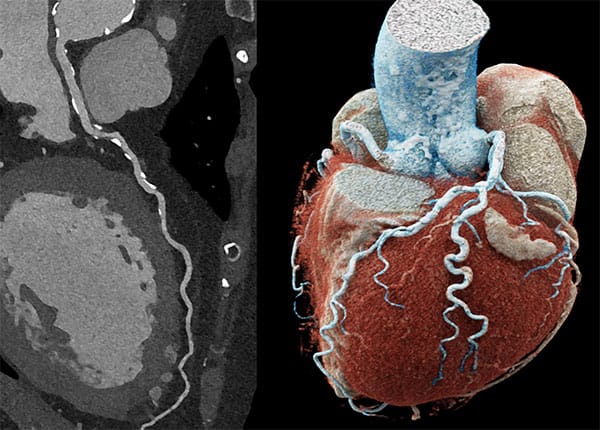
In a recent meta-analysis, stenosis was downclassified in severity in 34.2% of vessels when scanning with PCCT compared with conventional CT (95% CI, 27.3-41.9; P < .0001). The study authors attributed this to a reduction in blooming and better resolution. The study also reported fewer downstream invasive CAG referrals for PCCT scans than for conventional CT scans (pooled odds ratio [OR], 0.71; 95% CI, 0.63-0.79; P < .0001) and significantly higher rates of revascularization among those undergoing invasive CAG (OR, 1.43; 95% CI, 1.14-1.79; P = .0017).
Similarly, a single-center retrospective study comparing nearly 4000 PCCT scans with CT scans found lesser use of CAG with PCCT than with CT (9.9% vs 13.1% of the time; P < .001). PCCT patients tended to be referred more appropriately because they were more likely to ultimately undergo revascularization than patients scanned with conventional CT.
PCCT: A Pricey Integration to Clinic
The FDA first cleared the use of PCCT in September 2021, a few months after the first human cardiac scan was met with a round of applause by researchers at Mayo Clinic in Rochester, Minnesota. Shiyovich estimated that about 100 PCCT scanners are now operational across the US and about 200 are now operational around the world. He expects PCCT to become the gold standard within a decade or two.
In spring this year, the FDA cleared the first portable PCCT designed for musculoskeletal imaging in the community by a New Zealand-based medical device company. The FDA pointed to lower radiation, ultrahigh spatial resolution, sharp bone detail, and lower electronic noise offered by the scanner.
The $5 million sticker cost is still prohibitive for many sites. In addition, there is an upfront cost for the technological infrastructure needed to support higher-resolution image storage and the increased bandwidth it takes to transfer these images.
The PCCT Bottom Line
There are some imaging issues that PCCT does not solve, Shiyovich pointed out. PCCT can be performed with potentially lower radiation (for 0.4-mm scans), but the ultrahigh-resolution images (0.2-mm scans) require comparable radiation. He noted that PCCT does not eliminate the need for contrast, which is an issue for patients with allergies or kidney disease. “Breath holding and heart rate control still need to be considered,” he added.
For the clinician, there’s no added reimbursement and it’s a bit more complicated for the reader, Villines told Medscape Medical News. But aside from affordability, “there’s no downside. It’s very state of the art…. We are excited about it.”
Villines reported leading clinical trials for Abcentra, Cleerly, HeartFlow, and Milestone Pharmaceuticals. Shiyovich reported being a paid consultant for Artrya Ltd and receiving honoraria from Pfizer.
Performance of Photon-counting CT for Assessing Pretreatment Breast Cancer: Comparison with Mammography, MRI, and 18F-FDG PET/CT
Performance of Photon-counting CT for Assessing Pretreatment Breast Cancer: Comparison with Mammography, MRI, and 18F-FDG PET/CT
Abstract
Background
Photon-counting CT (PCCT) offers improved spatial resolution, contrast to noise ratio, and dose efficiency, but its clinical utility remains incompletely defined for breast cancer.
Purpose
To evaluate the feasibility of PCCT for pretreatment breast cancer assessment through comparisons with MRI, full-field digital mammography (FFDM), and fluorine 18 (18F) fluorodeoxyglucose (FDG) PET/CT.
Materials and Methods
In this prospective study (March–May 2025), female participants with breast lesions categorized as Breast Imaging Reporting and Data System 4C or higher at US or FFDM underwent breast MRI and multiphasic contrast-enhanced PCCT. 18F-FDG PET/CT was performed in a subset with locally advanced disease. Four radiologists independently evaluated lesion morphologic characteristics, additional findings, and clinical TNM stage. Agreement was analyzed using intraclass correlation coefficients (ICCs) and κ statistics. The diagnostic performance for additional lesions and nodal metastasis was compared with the reference standard (pathologic examination).
Results
Among 126 participants (mean age, 58.1 years ± 12.3 [SD]), interreader agreement across PCCT, MRI, and FFDM was good to excellent. PCCT agreed with MRI for lesion characterization (κ = 0.57–0.96) and clinical T categorization (κ = 0.86–0.88), with highest agreement with pathologic size (ICC, 0.70–0.81). For 46 pathologically confirmed additional lesions, PCCT was more sensitive than FFDM (difference, 44% [95% CI: 19, 66]) and similar to MRI (difference, 7% [95% CI: −5, 21]). Additionally, 44% (95% CI: 27, 52) of microcalcifications were missed at PCCT versus FFDM. For pathologically confirmed nodal metastasis, PCCT was more sensitive (difference, 10% [95% CI: 1, 20]) and accurate (difference, 6% [95% CI: 1, 11]) than MRI. For clinical N category, PCCT agreed with PET/CT (κ = 0.82 [95% CI: 0.62, 0.96]; n = 19). Two distant metastases identified at PCCT were consistent with 18F-FDG PET/CT and pathologic findings.
Conclusion
PCCT demonstrated similar performance to MRI for lesion characterization and detection of additional lesions, with better performance for nodal metastasis evaluation; however, detection of microcalcifications was limited.
© RSNA, 2026
Supplemental material is available for this article.
See also the editorial by Meeuwis and Dorrius in this issue.
Visual Abstract

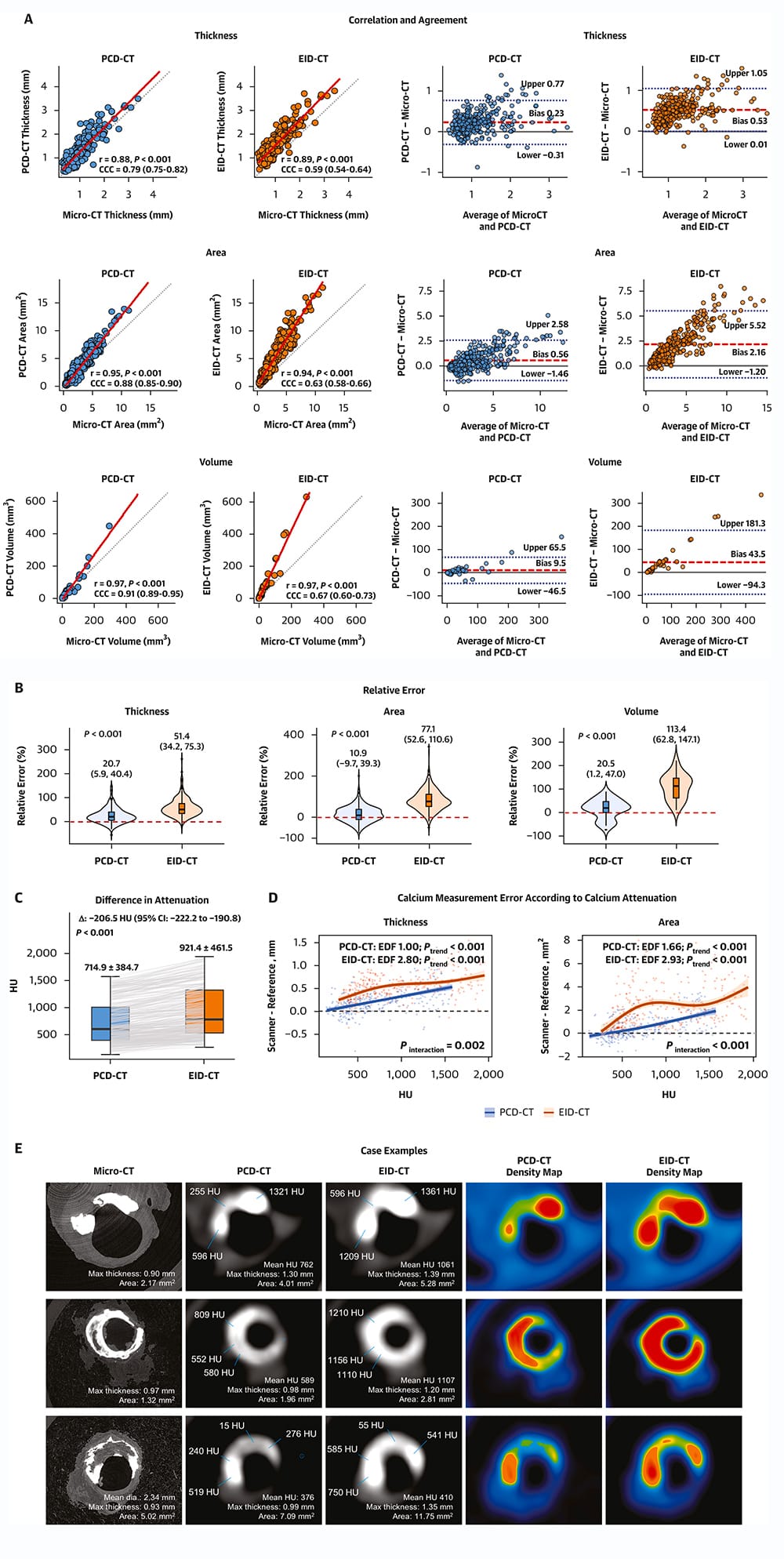
Photon-Counting Detector CT Reduces Calcium Overestimation Compared With Energy-Integrating Detector CT
Photon-Counting Detector CT Reduces Calcium Overestimation Compared With Energy-Integrating Detector CT
Micro-CT Validation in Cadaveric Arteries

Table of Contents
New Research Reveals Who May Benefit Most From a Heart Calcium Scan
New Research Reveals Who May Benefit Most From a Heart Calcium Scan
:max_bytes(150000):strip_icc()/GettyImages-1414433099-0aca1df7f6d74e6fb0fa5ea9b09f4510.jpg)
BSIP / Contributor / Getty Images
What we’re talking about: A new study suggests that coronary artery calcium scans are most beneficial for people at intermediate risk of heart disease.
Why this matters: Interest in CAC scans is on the rise, and cardiologists are concerned that people are being exposed to radiation unnecessarily.
What you can do: Speak to your doctor about whether a CAC scan is right for you.
People are increasingly looking to coronary artery calcium scans as a quick and painless way to learn more about their heart health risk—important information, considering heart disease is the leading cause of death in the United States. But as counterintuitive as it may seem, a recent study suggests that these scans aren’t worthwhile for everyone.
The new research found that people at borderline or intermediate risk of heart disease stand to benefit the most from CAC scans, compared with those at either high or low risk.1
Of course, every person is different, and it’s always worth consulting your primary care physician or cardiologist to determine which diagnostic tests are right for you. In the meantime, here’s what you need to know.
What Are CAC Scans?
CAC scans are non-contrast CT scans of the heart that doctors use to look for evidence of calcified plaque in the coronary arteries.2 The scans take only a few minutes and don’t require fasting or medications. That said, as CT scans, they do expose patients to a small amount of radiation.3
Doctors calculate calcium scores based on the volume and density of calcium within coronary arteries. Generally, the higher the score, the greater the risk of a heart attack.
According to Michael Wilkinson, MD, a cardiologist with UC San Diego Health, the scans can be a powerful tool for helping patients understand their heart health and potentially move forward with appropriate interventions. “There’s a big difference between seeing a number from a lipid panel and seeing calcified plaque in your arteries, and sometimes, that really goes a long way,” he said.
Why Did Researchers Want to Examine CAC Scans?
Patient interest in CAC scans has sharply increased over the years, in part because an increasing number of health centers now offer them without a prescription or physician order.4 But easier access has also raised concern among cardiologists that some people might be getting them unnecessarily. The tests might be simple, but they still involve radiation.
That unease prompted Nilay S. Shah, MD, MPH, an assistant professor of cardiology at Northwestern University Feinberg School of Medicine, to conduct the new study.
“The idea and the motivation for the research was to better understand who best would benefit from getting the information from a calcium scan, and how should we most appropriately be using them,” Shah said.
Shah and his team specifically wanted to know whether adding calcium scoring to the American Heart Association-recommended PREVENT equation to calculate 10-year risk for atherosclerotic cardiovascular disease (ASCVD) would improve the model’s performance. PREVENT scores consider factors such as blood pressure, age, and cholesterol to estimate a person’s 10- and 30-year risk of developing heart disease, including atherosclerotic cardiovascular disease and heart failure.5
For high-risk patients, Shah said the next step is often clear: taking a statin to lower cholesterol. But for people at borderline risk, deciding whether to take action can be less straightforward based on the score alone.
The new study “is an example of people trying to get into the nuances of how these risk scores will perform if you add things like imaging,” said Eugene Yang, MD, MS, FACC, a cardiologist and professor of cardiology and medicine at the University of Washington School of Medicine, who was not involved with the study.
How Did the Study Work, and What Did It Find?
To test how effectively calcium scoring can complement PREVENT-ASCVD scores in predicting cardiovascular risk, Shah’s team used data from the Multi-Ethnic Study of Atherosclerosis, a long-term research project sponsored by the National Heart, Lung, and Blood Institute that’s tracked the coronary health of more than 6,800 male and female participants from various racial backgrounds since 2000.
The researchers worked in two stages. During the first phase, they used the PREVENT-ASCVD equations to divide participants into low, borderline, intermediate, and high-risk categories. Then, they added participants’ calcium scores to the model to see if that yielded more accurate predictions than just the PREVENT-ASCVD equations alone.
In this case, adding calcium scores didn’t make much difference. But then in the second phase, the team zoomed in on participants with borderline and intermediate risk. This time, Shah said, “we had a much more substantial reclassification.”
In other words, the researchers found that calcium scans did little to enhance predictions for participants at high and low risk, but it provided valuable information for those with borderline to intermediate risk.
As all three experts pointed out, a central limitation of this study is that it followed one particular group of people, which means it may not fully represent all groups. For that reason, Wilkinson said, “It’ll be important to see something like this replicated in other cohorts.”
Since the research project began more than 20 years ago, Shah added, the health of the general population has changed, so the findings may not reflect today’s population. However, the tradeoff was that researchers were able to examine outcomes over a long period of time.
What This Means For You
Whatever your estimated risk or intervention you’re considering, it’s crucial to speak with your doctor. Guidelines and research can provide a framework for care, Shah said, “but it’s really important that every patient and their clinician has a risk-benefit discussion for shared decision-making.”
That said, Shah recommends CAC testing for people at borderline or intermediate risk—meaning their estimated 10-year risk falls between 3% and 10%—echoing guidance from the American Heart Association.2When those patients are unsure about taking a statin, he said, “A calcium score would be useful because it kind of breaks the tie.”
Wilkinson, however, thinks people on the cusp shouldn’t necessarily rule themselves out. “I think for even those patients who fall maybe a little bit outside of those 10-year risk estimates, using calcium scoring to personalize their risk assessment can be very helpful,” Wilkinson said.
Keep in mind that even eligible patients may not have their CAC scan covered by insurance. According to the American Heart Association, the test usually costs $50 to $250 without insurance.3
It’s also important to discuss your results with a qualified clinician—even if you got the scan without a prescription. This is especially important if the results are abnormal, Yang said, as patients “really need to make sure that they have somebody that can appropriately follow up with them.”
Coronary Artery Calcium Scoring May Refine Heart Risk Estimate and Statin Decisions
Coronary Artery Calcium Scoring May Refine Heart Risk Estimate and Statin Decisions
Coronary Artery Calcium Scoring May Refine Heart Risk Estimate and Statin Decisions
Coronary Artery Calcium Scoring May Refine Heart Risk Estimate and Statin Decisions
Visceral Belly Fat Can Make You Age Faster, Experts Warn
Visceral Belly Fat Can Make You Age Faster, Experts Warn
The Massive Clinical Payoff of Full Lung Screening with Lung CT
The Massive Clinical Payoff of Full Lung Screening
Transcript generated from video captions.
Hello. I’m Dr Maurie Markman, from City of Hope. I’d like to discuss over the next several minutes a very interesting modeling study that was recently reported in JAMA. The paper is entitled, “Lung Cancer Deaths Prevented and Life-Years Gained From Lung Cancer Screening.”
Very strong evidence-based data have demonstrated the utility of lung cancer screening in individuals with well-defined risk due to past and current smoking behavior. The specific characteristics have been well laid out in the literature, and really advertised to the public.
Key Points
- Lung cancer screening benefits strongest in well-defined smoking-risk populations.
- US Preventive Services Task Force recommends screening eligible high-risk adults.
- 2024 screening uptake only ~20%-25%; some regions <10%.
- 100% eligibility adherence modeled to triple deaths prevented + life-years gained.
- Full uptake projected: 62,110 deaths prevented; 872,270 life-years gained/5 years.
Which interventions increase lung screening uptake?
How does screening adherence vary by US region?
What barriers limit primary care lung screening referrals?
The lung cancer screening strategy has been recommended in these well-defined populations, in fact, by the United States Preventive Service Task Force. Despite these facts, evidence very strongly suggests that, overall, only about 1 in 5, so 20% or maybe 25% of eligible individuals based upon risk factors were screened in 2024,and in certain regions of the country, that number was actually less than 10%.
The individuals in this report conducted a modeling study, addressing the question of what if we assumed that we could get the message to the public, also perhaps to primary care doctors and others involved in care? What would be the impact if this message got through and essentially 100% of those eligible in the United States for screening actually participated in these well-defined programs? What if we were able to encourage people to do this? What would be the impact?
Recognizing the limitations of any modeling exercise, this analysis revealed the following. If essentially 100% of eligible individuals were screened, the number of deaths prevented and life-years gained would increase threefold compared to the current situation. Overall, 62,110 lung cancer deaths would be prevented over 5 years, with a gain of 872,270 life-years total.
This is a remarkable achievement when you consider death, morbidity, mortality, pain, and suffering associated with these lung cancer events. All of this could occur if an established screening modality was more widely employed.
This is an important message, I think, as a community, physicians, public health officials, members of society in general, and family members with individuals who are potentially at risk. We need to figure out a better way of communicating the benefits of lung cancer screening.
I thank you for your attention.
Every doctor is familiar with the necessary debate in modern medicine over our heavy reliance on scanners. Imaging has become the diagnostic workhorse across most specialties, leading purists to rightly point out the erosion of traditional clinical skills amongst new generations of doctors.
They often romanticise an era when a patient’s history and physical examination held immense diagnostic power, and it is easy to understand the appeal of this nostalgia: It recalls a time when physicians were viewed as almost superhuman by patients and society, capable of waltzing into a cubicle and uncovering complex pathology with nothing more than a hand placed on an abdomen or a listen to the chest. Sending a patient to the radiology department for the answer doesn’t quite have the same gravitas for the doctor.
Others may cry out at the risks of ionising radiation, the strain on the healthcare system, and the psychologic burden of the incidental finding. But for all attempts to reduce our proclivity to lean on imaging, demand continues to climb. The Royal College of Radiologists’ 2024 workforce census found that CT and MRI examinations in England rose by 8% in 2023-24, while the UK’s consultant radiology workforce grew by 4.7%.
So is overreliance on the scanner really the problem?
When we begin to stack the above factors against the monumental risks associated with going under the scalpel (such as intraoperative risks, hospital-acquired infections, anaesthetic complications, and severe psychological distress), the case for withholding a scan begins to shrink dramatically. In this piece, I make the case that where surgery is the alternative, the greater risk lies in scanning too little.
The Prospect of Surgery
The prospect of surgery is perhaps one of the most anxiety-inducing moments a patient can face.
From the anaesthetist’s cocktail of paralytics and hypnotics awaiting them in the induction room to the trauma of the surgery itself and the gruelling uphill battle of postoperative recovery, it is an immense psychological and physical toll to ask from any human being. As clinicians, it is our duty to make every conceivable effort to minimise the necessity of surgical intervention.
Historically, however, clinical medicine was forced to operate within a necessary margin of error.
Before high-fidelity imaging became so readily accessible, we simply could not afford the luxury of absolute certainty. We took histories to the best of our ability, palpated abdomens, scrutinised blood results, and made educated leaps of faith. But clinical intuition, even at its best, is never an exact science — it deals with probabilities rather than certainties.
This uncertainty steered countless patients to undergo surgeries they didn’t actually need. Laparoscopies that showed a healthy appendix, or exploratory laparotomies that opened the abdomen only to close it again, were seen as acceptable trade-offs to prevent fatal complications like sepsis and perforation.
The Reign of Radiology
Cross-sectional imaging has completely rewritten this contract. Think about this for a moment: We now possess the ability to readily visualise almost every recess and corner of the human anatomy noninvasively, in three dimensions, and at a good resolution. Oh, and all while the patient lies comfortably awake on the table with no need for analgesia or sedation.
When the case is laid out this way, is it any wonder that the on-call radiology registrar’s phone is never silent?
But with those surgical risks that we covered in mind, it might be time to flip the original question on its head: What if the problem isn’t that we rely on the scanner too much, but that we use it too little?
The Cost of a 5% Margin of Error
Consider the classic surgical presentation of an acute abdomen. Imagine we use a highly validated clinical scoring system, such as the Alvarado score, for a patient presenting with right iliac fossa pain. The score in our hypothetical patient suggests a 95% likelihood of acute appendicitis. Most doctors would tell you that this is a strong mandate for a trip to the operating theatre.
But we need to touch on the inverse of that statistic: a 5% margin of error.
This means that 1 in 20 patients presenting with these exact clinical variables as our patient will be subjected to an entirely unnecessary surgery. We must ask ourselves a difficult, almost paradigm-shifting question: Can a 5% negative appendicectomy rate ever truly be acceptable in an era where a CT scan can definitively rule it out within minutes?
When we hold the power to eliminate that 1-in-20 risk for surgical morbidity with something as simple as a scan, opting for surgery based on probability alone begins to feel more like an antiquated gamble. So, it seems that the balance of risk has fundamentally shifted in modern medicine. Although we should try to minimise radiation exposure, particularly in more radiosensitive younger patients, the potential harm of an unnecessary operation may outweigh the small long-term risk associated with a clinically justified, modern low-dose CT abdomen.
Needless to say, this is not a call to abandon the clinical examination, nor is it an endorsement of defensive, thoughtless medicine. The history and physical exam remain the crucial foundation that guides the need for imaging and tells the reporting radiologist where to look. But when it comes to the final decision to open the human body, imaging has fundamentally changed how we approach risk for our patients.
Arya Anthony Kamyab is a speciality trainee doctor in clinical radiology working in Oxford University Hospitals. You can follow him on Substack and on Instagram @aryak.writes.